MaluDB is an enterprise grade AI Memory system designed for large scale institutional memory. Kinetic Seas is the developer and official maintainer of the open-source MaluDB system.
MaluDB is built on PostgreSQL 17 and is designed for long-term institutional memory and scalability.
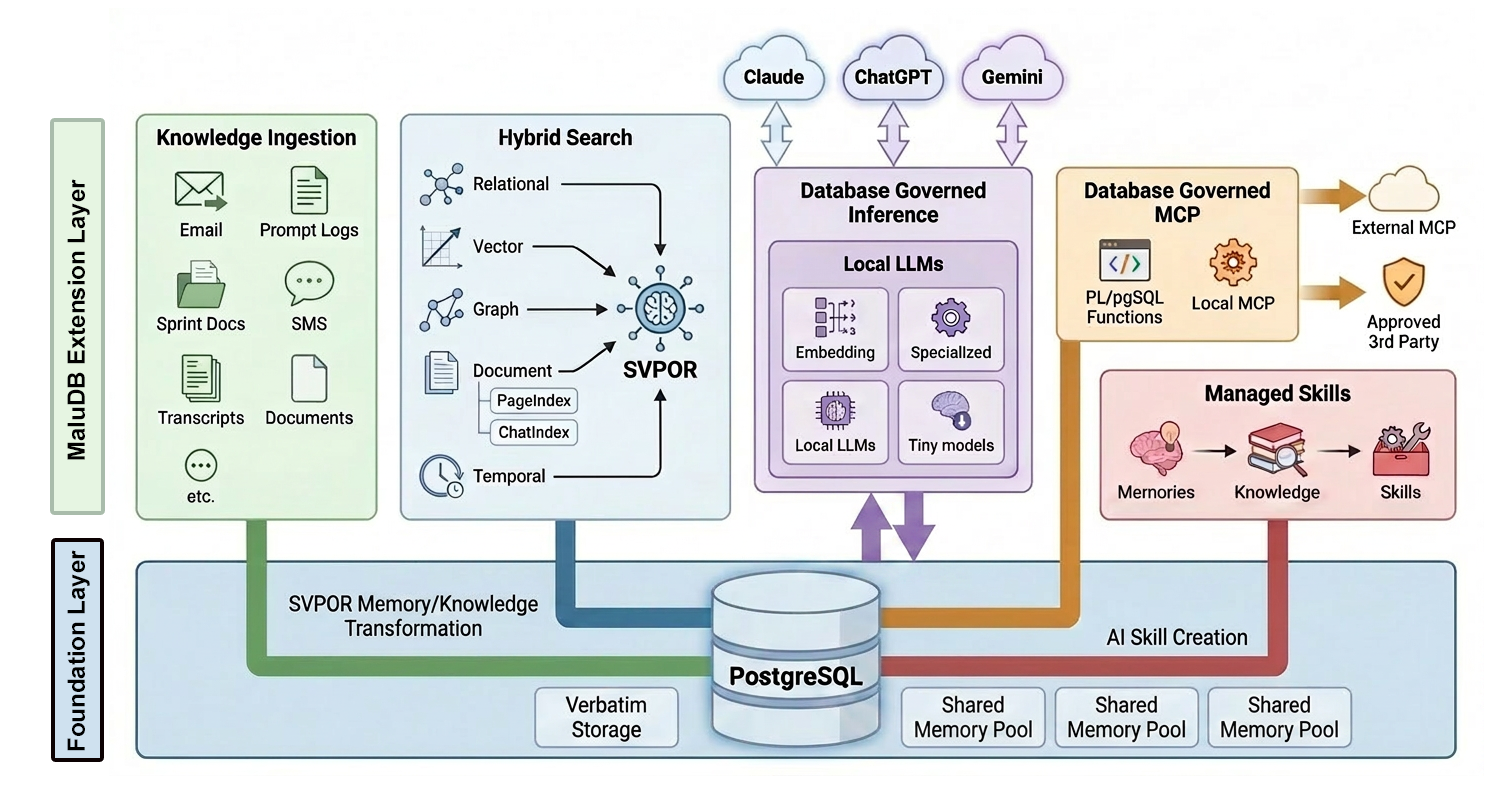
It is a database management system for both people and AI agents that stores memories and historical knowledge alongside data — delivered as a set of extensions on PostgreSQL, the most trusted enterprise database.
MaluDB doesn't only store your workflows and knowledge: it turns them into skills that AI agents can use to solve tasks while saving tokens.
A database must store memories — context, provenance and meaning — not just isolated facts.
Developers should not have to stitch several databases together to get a working memory system.
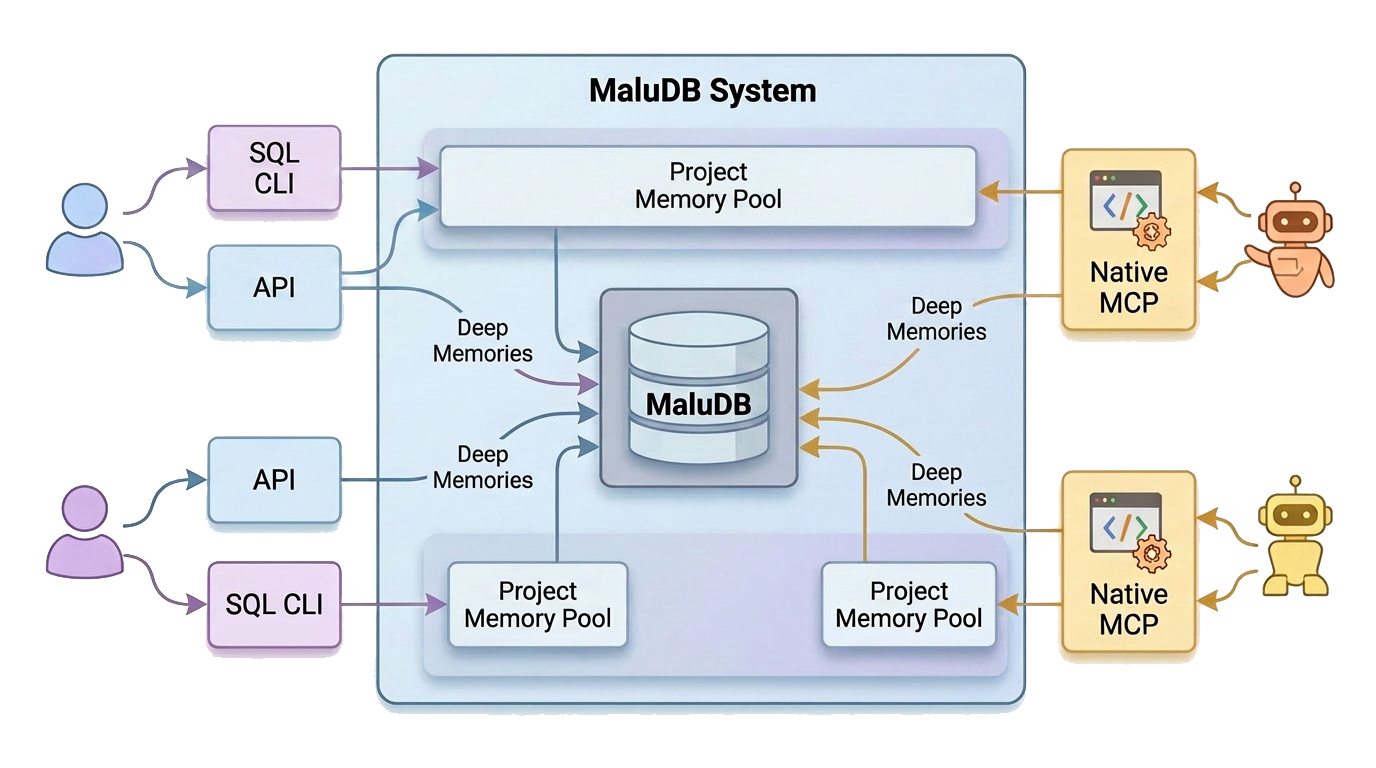
Agents need to share memory in real time — collaborating on the same fresh, evolving context.
Access to LLMs and MCP servers should be governed by database security — not bolted on afterwards.
Memories, knowledge, workflows and skills for people and AI agents — in one enterprise database management system.
LLM access and MCP server security belong in the enterprise database. With MaluDB you control the prompts executed, the MCP tools and the data AI uses — at the database level, down to row-level security.
Emails, chat transcripts, tickets, meeting notes, documents, source control, operational logs, time series and relational databases — each artifact preserved verbatim as a Source Package. Decades of scattered history become an addressable, reprocessable base for memory.
Active Memory Pools give people, agents and tools a shared, task-scoped working space: load authorized memories, publish observations, mark pending claims and promote validated knowledge — so every agent works from the same fresh, permission-filtered context.
Four search modes working together, with permissions enforced inside candidate generation — no more stitching three products together to answer one question.
Relational Vector Graph TemporalRecords, tickets, messages, logs, dashboards and documents show what happened. The reasons, assumptions, evidence and lessons stay scattered across tools — and are rebuilt by hand every time a team changes or a system migrates.
MaluDB treats this as a database concern. Memory Objects are governed by the system: identity, provenance, validity, permissions, lifecycle and audit live in the catalog — not in application code. Storage engines, embedding models, graph indexes and LLMs remain replaceable mechanisms attached through controlled interfaces.
Run it on PostgreSQL on your own servers, or let us run it for you. Kinetic Seas is the official developer and maintainer of MaluDB.